
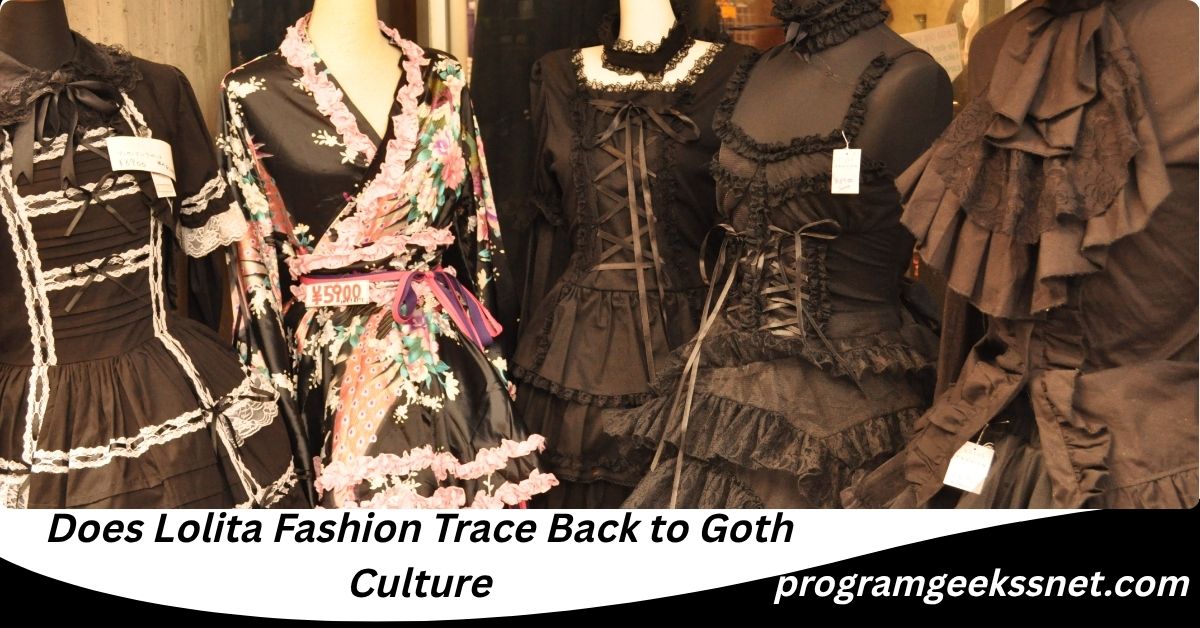
Does Lolita Fashion Trace Back to Goth Culture? A Complete, Easy-to-Understand Guide
Lolita fashion is one of the most unique and recognizable street styles in the world. With its lace, ribbons, and elegant silhouettes, it often surprises people who are seeing it for the first time. At the same time, many people notice similarities between Lolita fashion and Goth culture. This leads to a common question: does lolita fashion trace back to goth culture?
The short answer is no, but the full story is much more interesting.
In this detailed guide, we will explore the origins of Lolita fashion, the history of Goth culture, how they overlap, and why people often confuse the two. By the end, you will clearly understand whether lolita fashion traces back to goth culture and how both styles developed independently while still influencing each other.
Understanding Lolita Fashion: Origins, Meaning, and Identity
Lolita fashion began in Japan during the late 1970s and became more popular in the 1980s and 1990s. It is inspired by Victorian and Rococo clothing styles, especially children’s clothing from those periods. The focus is on modesty, elegance, and detailed craftsmanship.
Lolita fashion is not about being childish. It is about expressing beauty, creativity, and individuality. The style emphasizes structured dresses, petticoats for volume, blouses, knee socks, and accessories like bows, lace gloves, and parasols.
Many people think the name “Lolita” comes from the novel by Vladimir Nabokov, but in fashion, it has a completely different meaning. In Japan, the term was used simply because it sounded cute and unique, not because of the book’s themes.
Lolita fashion is often divided into different substyles. Some of the most popular include:
- Sweet Lolita, which uses pastel colors and cute prints
- Classic Lolita, which is more mature and inspired by historical fashion
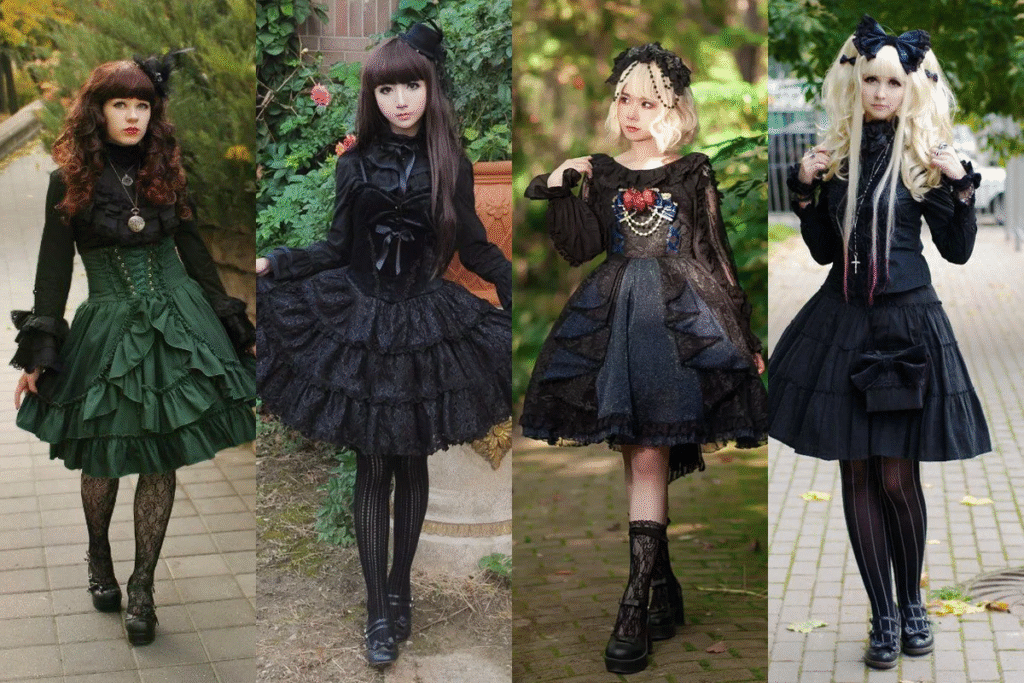
- Gothic Lolita, which uses darker colors like black, burgundy, and navy
This last category is one reason people ask: does lolita fashion trace back to goth culture?
What Is Goth Culture and Where Did It Come From?
To understand the connection, we first need to understand Goth culture.
Goth culture started in the late 1970s and early 1980s in the United Kingdom. It grew out of the post-punk music scene. Bands like Bauhaus, Siouxsie and the Banshees, and The Cure helped shape the Goth identity.
Goth culture is not just about clothing. It is deeply connected to music, art, literature, and philosophy. It often explores themes like mystery, darkness, romance, and introspection.
The fashion side of Goth culture includes:
- Black clothing
- Dramatic makeup
- Lace and velvet fabrics
- Victorian-inspired pieces
- Accessories like chokers and boots
Because both Goth and Lolita styles sometimes use Victorian influences and lace, people assume there must be a direct link. That is where confusion begins.
Does Lolita Fashion Trace Back to Goth Culture? The Clear Answer
Does lolita fashion trace back to goth culture?
No, Lolita fashion does not trace back to Goth culture. It developed separately in Japan, while Goth culture developed in the UK and Europe.
However, the two styles do share some visual similarities. These similarities come from shared inspiration sources, not from one style coming from the other.
Both styles draw from historical European fashion, especially the Victorian era. That is why they sometimes look related.
So while they may overlap in appearance, their origins, meaning, and purpose are different.
Also Read: erectn: Understanding, Causes, Problems, and Natural Support
How Lolita Fashion Developed Independently in Japan
Lolita fashion grew out of Japanese youth culture. During the 1970s and 1980s, young people in Japan began rejecting strict social expectations. They wanted to express themselves through fashion.
Designers and brands started creating clothing that was very different from Western trends. Instead of modern, revealing fashion, they looked to the past for inspiration.
Shops in areas like Harajuku in Tokyo became centers for creative fashion styles. Lolita fashion became one of the most recognizable of these styles.
The goal of Lolita fashion is not rebellion in a dark or aggressive way. Instead, it focuses on:
- Elegance
- Fantasy
- Personal identity
- Escaping modern fashion norms
This is very different from Goth culture, which often includes darker themes and emotional expression tied to music.
The Role of Gothic Lolita: Where the Confusion Begins
The main reason people ask does lolita fashion trace back to goth culture is because of Gothic Lolita.
Gothic Lolita is a substyle of Lolita fashion. It uses darker colors and sometimes includes crosses, dark makeup, and more dramatic looks.
However, even Gothic Lolita is still part of Lolita fashion, not Goth culture.
Here are the key differences:
Gothic Lolita
- Focuses on silhouette and structure
- Keeps modesty rules of Lolita fashion
- Uses dark colors but stays elegant
- Inspired by historical clothing
Goth fashion
- Focuses more on mood and expression
- Can be less structured
- Often tied to music and identity
- More flexible in style
Gothic Lolita may look similar to Goth fashion, but it follows strict Lolita rules. That is why it is still considered part of Lolita fashion.
Shared Influences: Why They Look Similar
Even though Lolita fashion does not trace back to Goth culture, both styles share similar inspirations.
These include:
Victorian fashion
Both styles take inspiration from Victorian-era clothing. This includes long skirts, lace, and layered outfits.
Romanticism
Both styles appreciate beauty, emotion, and artistic expression.
Historical aesthetics
They both look to the past rather than modern fashion trends.
Because of these shared influences, people often think one comes from the other. In reality, they simply developed in parallel.
Key Differences Between Lolita Fashion and Goth Culture
Understanding the differences helps answer the question clearly: does lolita fashion trace back to goth culture?
Here are the most important differences:
Origin
Lolita fashion started in Japan
Goth culture started in the UK
Purpose
Lolita fashion focuses on elegance and creativity
Goth culture focuses on music, emotion, and identity
Structure
Lolita fashion has strict rules
Goth fashion is more flexible
Community
Lolita communities focus on fashion coordination
Goth communities focus on music and lifestyle
Color use
Lolita uses many colors depending on substyle
Goth mostly uses black and dark tones
These differences show that Lolita fashion is its own unique style.
Also Read: Fashionista Accessories: The Complete Guide to Elevating Your Style in 2026
How Western Media Created the Confusion
Another reason people ask does lolita fashion trace back to goth culture is because of how media presents these styles.
In Western media, anything with lace, black clothing, or Victorian elements is often labeled as “Goth.” This oversimplification leads to confusion.
When people see Gothic Lolita outfits, they assume they are part of Goth culture. But this is not accurate.
Media often ignores the cultural background and meaning behind fashion styles. This makes it harder for people to understand the differences.
The Influence of Music: A Major Difference
Music plays a huge role in Goth culture. It is one of the main reasons the subculture exists.
Lolita fashion, on the other hand, is not based on music.
There are some Japanese musicians who wear Lolita-inspired outfits, especially in the Visual Kei scene. However, this does not mean Lolita fashion comes from Goth culture.
Music is central to Goth identity, but it is not central to Lolita fashion.
Modern Evolution of Lolita Fashion
Today, Lolita fashion continues to grow and evolve. It has spread beyond Japan and now has communities all over the world, including the United States.
Modern Lolita fashion includes:
- New designs and fabrics
- Online communities and events
- Global fashion brands
- Increased accessibility through social media
Even with these changes, the core of Lolita fashion remains the same. It is still focused on elegance, structure, and self-expression.
This shows that Lolita fashion has its own strong identity, separate from Goth culture.
Modern Goth Culture and Its Evolution
Goth culture has also changed over time. While it started with specific music styles, it has expanded into different forms.
Modern Goth includes:
- New music genres
- Diverse fashion styles
- Online communities
- Artistic expression
Even though Goth fashion has evolved, it still remains connected to its roots in music and emotional expression.
This is another reason why Lolita fashion does not trace back to Goth culture.
Cultural Context Matters More Than Appearance
One of the biggest mistakes people make is judging fashion styles only by how they look.
When asking does lolita fashion trace back to goth culture, it is important to consider cultural context.
Lolita fashion comes from Japanese youth culture and focuses on beauty and individuality.
Goth culture comes from Western music scenes and focuses on emotion and identity.
Even if two styles look similar, their meaning can be completely different.
Why the Question Still Matters Today
You might wonder why people still ask does lolita fashion trace back to goth culture.
The answer is simple: both styles are still popular and often seen online.
Social media platforms like Instagram and TikTok show many fashion styles together. Without context, it is easy to mix them up.
Understanding the difference helps people appreciate each style for what it truly is.
Expert Insight: A Deeper Interpretation
From a deeper perspective, Lolita fashion and Goth culture represent two different ways of responding to modern society.
Lolita fashion
- Escapes modern trends
- Creates a fantasy world
- Focuses on beauty and control
Goth culture
- Reflects on emotions and reality
- Explores darker themes
- Expresses individuality through music
Both are forms of self-expression, but they take different paths.
This is why it is more accurate to say they are cousins, not parent and child.
Also Read: Mariano Iduba: The Vision, Work, and Impact of a Modern Digital Entrepreneur
Final Verdict: Does Lolita Fashion Trace Back to Goth Culture?
Does lolita fashion trace back to goth culture?
No, Lolita fashion does not trace back to Goth culture. It developed independently in Japan and has its own history, purpose, and identity.
However, the two styles share some visual similarities because they both draw from historical European fashion and romantic aesthetics.
Understanding this helps clear up confusion and allows people to appreciate both styles in their own way.
FAQs About “Does Lolita Fashion Trace Back to Goth Culture”
Is Gothic Lolita the same as Goth fashion?
No, Gothic Lolita is a substyle of Lolita fashion. It follows Lolita rules and structure, while Goth fashion is more flexible and tied to music and culture.
Why do people confuse Lolita fashion with Goth culture?
People confuse them because both styles use dark colors, lace, and Victorian influences. Media and lack of knowledge also contribute to this confusion.
Can someone be both Goth and wear Lolita fashion?
Yes, a person can enjoy both styles. However, the styles themselves are still separate in origin and meaning.
Is Lolita fashion influenced by Western culture?
Yes, Lolita fashion is inspired by European historical clothing, but it was developed in Japan and shaped by Japanese culture.
Does Lolita fashion have any connection to music?
Not directly. Unlike Goth culture, Lolita fashion is not based on music, although some musicians wear Lolita-inspired outfits.
Is Lolita fashion only for certain age groups?
No, people of all ages can wear Lolita fashion. It is about personal expression, not age.
Is Lolita fashion popular in the United States?
Yes, Lolita fashion has a growing community in the US, with events, meetups, and online groups.
editor's pick
latest video

news via inbox
Nulla turp dis cursus. Integer liberos euismod pretium faucibua