How to Construct a Robot: The Complete Beginner-to-Advanced Guide in 2026
Robotics is no longer limited to large factories, research labs, or technology companies. Today, anyone with basic tools, patience, and a willingness to learn can build a robot at home. Whether you are a student, hobbyist, engineer, teacher, or technology enthusiast, learning how to construct a robot can be an exciting and rewarding experience.
Robots are used in many industries across the United States, including manufacturing, healthcare, agriculture, transportation, education, and home automation. As technology becomes more affordable, building robots has become easier than ever before.
If you have ever wondered how to construct a robot from scratch, this comprehensive guide will walk you through every step. You will learn about robot components, planning, design, assembly, programming, testing, troubleshooting, and future improvements. You will also discover how to construct a simple robot and how to construct a robotic arm.
By the end of this guide, you will have a clear understanding of the complete robot-building process and the confidence to begin your own robotics project.
What Is a Robot?
A robot is a machine designed to perform tasks automatically or semi-automatically. Robots use sensors, processors, motors, and software to interact with their environment and complete specific actions.
Some robots perform simple tasks such as moving forward and avoiding obstacles. Others can perform complex activities such as surgery, warehouse management, or space exploration.

Every robot typically contains four major systems:
- Mechanical structure
- Electronic components
- Control system
- Software programming
These systems work together to allow the robot to sense, think, and act.
Why Learn How to Construct a Robot?
Building a robot offers many benefits.
Develop Technical Skills
Robot construction teaches engineering, electronics, programming, mechanics, and problem-solving skills.
Improve Creativity
Every robot project requires unique solutions and creative thinking.
Prepare for Future Careers
Robotics is one of the fastest-growing technology sectors in the United States. Skills gained through robotics can support careers in:
- Engineering
- Artificial Intelligence
- Manufacturing
- Software Development
- Automation
- Research
Build Real-World Projects
Unlike many theoretical subjects, robotics allows you to create something physical that moves and interacts with the world.
Understanding the Main Parts of a Robot
Before learning how to construct a robot, it is important to understand its main components.
Robot Frame
The frame acts as the robot’s skeleton. It supports all other components.
Common frame materials include:
- Aluminum
- Plastic
- Acrylic
- Wood
- Carbon fiber
For beginners, acrylic and plastic frames are affordable and easy to work with.
Motors
Motors create movement.
Common motor types include:
- DC motors
- Servo motors
- Stepper motors
DC motors are ideal for beginner mobile robots.
Servo motors are commonly used in robotic arms.
Wheels and Movement Systems
Mobile robots often use:
- Wheels
- Tracks
- Legs
Wheels are the easiest option for beginners.
Sensors
Sensors allow robots to gather information.
Popular sensor types include:
- Ultrasonic sensors
- Infrared sensors
- Temperature sensors
- Light sensors
- Camera modules
- Motion sensors
Sensors help robots understand their surroundings.
Microcontroller
The microcontroller acts as the robot’s brain.
Popular choices include:
- Arduino Uno
- Arduino Mega
- ESP32
- Raspberry Pi Pico
For beginners, Arduino remains one of the easiest platforms to learn.
Also Read: How Much Is a Litter Robot? Complete 2026 Pricing Guide, Costs, Features, and Buying Tips
Power Supply
Every robot needs energy.
Common power sources include:
- AA batteries
- Lithium-ion batteries
- Rechargeable battery packs
Choose a power source that matches your robot’s voltage requirements.
Motor Driver
Most motors require a motor driver to control speed and direction.
Popular drivers include:
- L298N
- TB6612FNG
- DRV8833
Programming Software
Programming allows the robot to make decisions.
Common programming languages include:
- C++
- Python
- Scratch
- Java
Arduino projects primarily use C++.
Planning Your Robot Project
A common mistake beginners make is starting construction without a plan.
Before purchasing components, answer these questions:
What Task Will the Robot Perform?
Examples include:
- Line following
- Obstacle avoidance
- Object pickup
- Remote control driving
- Home automation
The robot’s purpose determines its design.
What Is Your Budget?
Robot projects can range from $50 to several thousand dollars.
Beginners can build useful robots for less than $150.
What Skills Do You Already Have?
Consider your experience with:
- Electronics
- Programming
- Mechanical assembly
Start with a project that matches your current skill level.
How to Construct a Simple Robot
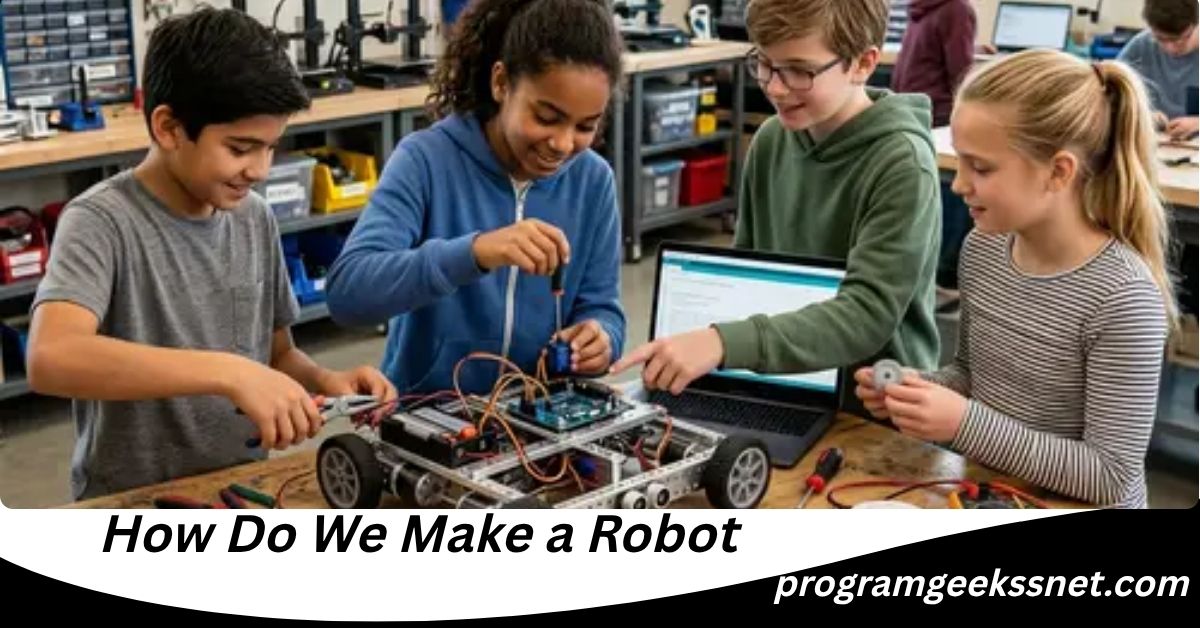
For beginners, a simple obstacle-avoiding robot is one of the best starting projects.
Step 1: Gather Materials
You will need:
- Arduino Uno
- Ultrasonic sensor
- Two DC motors
- Motor driver
- Robot chassis
- Wheels
- Battery pack
- Jumper wires
Step 2: Assemble the Chassis
Attach:
- Motors
- Wheels
- Battery holder
- Control board
Make sure all components fit securely.
Step 3: Install the Sensor
Mount the ultrasonic sensor at the front of the robot.
This allows the robot to detect obstacles ahead.
Step 4: Connect Electronics
Connect:
- Motors to motor driver
- Sensor to Arduino
- Battery to power system
Double-check all wiring connections.
Step 5: Upload the Program
Install the Arduino software and upload code that:
- Reads sensor data
- Detects obstacles
- Changes motor direction when needed
Step 6: Test the Robot
Place the robot on a flat surface.
Observe how it reacts to objects.
Adjust sensor settings if necessary.
This project is often the first step for anyone learning how to construct a simple robot.
How to Construct a Robot From Scratch
Building a robot completely from scratch provides greater flexibility and customization.
Design the Structure
Create sketches or 3D models.
Consider:
- Weight distribution
- Component placement
- Accessibility for repairs
Select Components Carefully
Choose components based on performance requirements rather than popularity alone.
Important factors include:
- Voltage compatibility
- Weight
- Size
- Cost
- Processing power
Create the Mechanical Assembly
Build or fabricate the frame.
Ensure:
- Strong joints
- Stable balance
- Proper motor mounting
Design the Electronic System
Create a wiring plan before assembly.
Organized wiring improves:
- Safety
- Maintenance
- Troubleshooting
Develop the Software
Break programming into sections:
- Sensor reading
- Decision making
- Motor control
- Error handling
Testing each section separately reduces debugging time.
Perform Multiple Test Cycles
Professional roboticists rarely achieve perfect results on the first attempt.
Expect to:
- Adjust hardware
- Improve code
- Replace components
- Refine movement
Learning how to construct a robot from scratch teaches valuable engineering skills that extend far beyond robotics.
How to Construct a Robotic Arm
A robotic arm is one of the most useful robot projects.
It can:
- Pick up objects
- Move items
- Perform repetitive tasks
- Demonstrate industrial automation concepts
Step 1: Design the Arm Structure
Most robotic arms contain:
- Base
- Shoulder joint
- Elbow joint
- Wrist joint
- Gripper
Step 2: Choose Servo Motors
Servo motors provide precise positioning.
Each joint typically requires one servo motor.
Step 3: Build the Mechanical Sections
Use:
- Acrylic sheets
- Aluminum brackets
- 3D-printed parts
Ensure all joints move smoothly.
Step 4: Install the Electronics
Connect:
- Servo motors
- Power supply
- Microcontroller
Step 5: Program Motion Control
Create software that controls:
- Joint angles
- Movement speed
- Object handling
Step 6: Calibrate the Arm
Calibration ensures accurate movement.
Adjust each joint until positioning is precise.
Understanding how to construct a robotic arm is an excellent way to learn advanced robotics concepts.
Essential Programming Concepts for Robotics
Programming gives intelligence to robots.
Key concepts include:
Variables
Variables store data.
Examples:
- Distance measurements
- Motor speeds
- Sensor values
Conditional Statements
Robots often use decisions.
Example:
If obstacle detected, turn left.
Loops
Loops allow continuous operation.
Example:
Read sensors repeatedly.
Functions
Functions organize code into reusable sections.
Also Read: How Many Seasons Mr Robot? Complete Guide to the Award-Winning TV Series
This improves readability and maintenance.
Libraries
Programming libraries simplify development.
Popular robotics libraries provide:
- Sensor control
- Motor management
- Communication tools
Common Mistakes Beginners Make
Ignoring Power Requirements
Insufficient power causes poor performance and unexpected shutdowns.
Poor Wiring
Messy wiring increases troubleshooting difficulty.
Overcomplicated Designs
Start simple.
Add advanced features later.
Skipping Testing
Test components individually before assembling everything together.
Choosing Components Without Research
Always verify compatibility before purchasing parts.
Advanced Features You Can Add
Once your basic robot works, consider adding advanced functionality.
Artificial Intelligence
AI allows robots to:
- Recognize objects
- Learn behaviors
- Make smarter decisions
Computer Vision
Cameras enable robots to:
- Detect faces
- Read signs
- Identify objects
Wi-Fi Connectivity
Wireless communication allows remote monitoring and control.
Voice Commands
Voice control creates a more interactive experience.
GPS Navigation
GPS enables outdoor autonomous movement.
Robot Safety Tips
Safety should always be a priority.
Use Proper Voltage
Never exceed component voltage limits.
Protect Moving Parts
Keep fingers away from gears and motors.
Secure Batteries
Loose batteries can damage components.
Test in Open Areas
Avoid testing robots in crowded environments.
Keep Emergency Shutdown Options
Always have a quick way to turn off the robot.
The Future of Robotics
Robotics technology continues to advance rapidly.
Also Read: How Long Is the Wild Robot Movie? Complete Guide to Runtime, Rating, Story, and Theater Experience
Emerging trends include:
- Artificial intelligence integration
- Human-robot collaboration
- Autonomous delivery systems
- Healthcare robotics
- Agricultural automation
- Smart manufacturing
As costs continue to decrease, robotics will become even more accessible to individuals and small businesses.
Learning how to construct a robot today provides valuable skills for tomorrow’s technology-driven world.
Expert Insights: What Most Online Guides Miss
Many online tutorials focus only on assembly instructions. However, successful robot construction requires understanding the complete engineering process.
The most important lesson is that robotics is not about buying expensive components. It is about creating systems where mechanics, electronics, and software work together effectively.
Beginners often believe advanced robots require advanced hardware. In reality, many successful robotics projects achieve excellent results using simple components and smart programming.
Another overlooked factor is iteration. Professional engineers constantly redesign, test, and improve their robots. Treat every failure as data rather than a setback.
The fastest way to improve is to build multiple small robots rather than spending months creating one complex machine.
Conclusion
Learning how to construct a robot is one of the most rewarding technology skills available today. Whether your goal is to build an educational project, develop engineering skills, or prepare for a future career in robotics, the process offers endless opportunities for learning and innovation.
Start with a simple project, understand the fundamental components, practice programming, and gradually add advanced features. As your confidence grows, you can move from learning how to construct a simple robot to mastering how to construct a robot from scratch and even building sophisticated robotic arms.
Robotics combines creativity, engineering, and problem-solving in a way few other fields can match. The best time to begin building your first robot is now.
Frequently Asked Questions (FAQs)
How much does it cost to build a beginner robot?
Most beginner robots cost between $50 and $150 depending on the components and features included.
Do I need programming experience to build a robot?
No. Many beginner-friendly platforms provide tutorials and sample code that make learning easier.
What is the easiest robot for beginners to build?
An obstacle-avoiding robot or line-following robot is usually the easiest project for beginners.
Can I build a robot without Arduino?
Yes. Alternatives include Raspberry Pi, ESP32, Raspberry Pi Pico, and other microcontrollers.
How long does it take to build a robot?
A simple robot can be completed in a few hours, while advanced robots may take weeks or months.
Can children learn robotics?
Yes. Many robotics kits are designed specifically for children and students.
What tools are needed to build a robot?
Common tools include screwdrivers, wire cutters, pliers, soldering equipment, and a multimeter.
Is 3D printing necessary for robot construction?
No. Many robots can be built using pre-made chassis kits, wood, plastic, or metal parts.
What type of battery is best for robots?
Rechargeable lithium-ion batteries are popular because they provide high energy density and long operating times.
Can robots be upgraded later?
Yes. Most robots can be improved by adding sensors, cameras, AI capabilities, wireless communication, or stronger motors.
What is the biggest challenge when building a robot?
Integrating mechanics, electronics, and software into a reliable system is often the most challenging part.
Can I make a robot that works autonomously?
Yes. By combining sensors, programming, and decision-making algorithms, robots can operate without direct human control.
editor's pick
latest video

news via inbox
Nulla turp dis cursus. Integer liberos euismod pretium faucibua