How Do Industrial Robots Work in Factories? A Complete Guide to Modern Factory Automation
Industrial robots have transformed the manufacturing industry. From assembling cars and packaging food to welding metal and inspecting products, robots are now an essential part of modern factories. As businesses seek higher productivity, better quality, and lower operating costs, robotic automation continues to grow across the United States and around the world.
Many people ask, “how do industrial robots work in factories?” The answer involves a combination of mechanical engineering, computer programming, sensors, artificial intelligence, and advanced control systems. Industrial robots are designed to perform repetitive, precise, and often dangerous tasks with speed and consistency that humans cannot easily match.
In this comprehensive guide, you will learn exactly how industrial robots operate, the technology behind them, their applications, advantages, limitations, and what the future holds for factory automation. Whether you are a student, business owner, factory manager, or simply curious about robotics, this article provides a detailed and easy-to-understand explanation.
What Are Industrial Robots?
Industrial robots are programmable machines designed to perform manufacturing and production tasks automatically. They can move, manipulate objects, interact with equipment, and perform highly precise operations.
Unlike household robots, industrial robots are built for demanding environments where accuracy, reliability, and efficiency are critical.
According to the definition widely used in manufacturing, an industrial robot is an automatically controlled, reprogrammable, multipurpose machine capable of moving in multiple directions to perform various tasks.
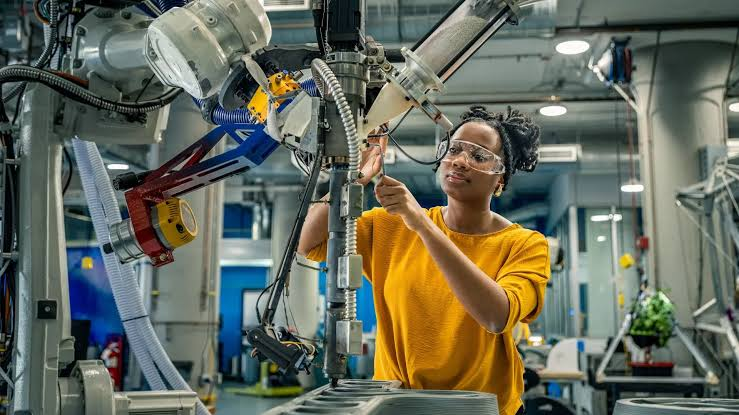
These robots can work independently or alongside human workers, depending on the factory setup.
How Do Industrial Robots Work in Factories?
The simplest answer to the question “how do industrial robots work in factories” is that they follow programmed instructions using motors, sensors, controllers, and software.
The process typically works as follows:
Step 1: Receiving Instructions
Every industrial robot receives commands from a control system. These commands tell the robot:
- Where to move
- What task to perform
- How fast to operate
- When to start and stop
- How to react to changing conditions
The instructions may be pre-programmed or generated dynamically through advanced software systems.
Step 2: Processing Information
The robot controller acts as the robot’s brain. It interprets instructions and calculates the precise movements needed to complete the task.
Also Read: How Much Is the Robotic Dog? Complete 2026 Pricing Guide for Robot Dogs
The controller continuously analyzes:
- Position data
- Speed information
- Sensor feedback
- Production requirements
This allows the robot to make accurate movements in real time.
Step 3: Moving Through Motors and Joints
Industrial robots contain electric motors connected to joints and mechanical arms.
These motors create movement in multiple directions.
For example, a robotic arm may:
- Rotate
- Lift
- Extend
- Bend
- Grip objects
The robot moves with extremely high precision, often within fractions of a millimeter.
Step 4: Using Sensors
Sensors help robots understand their environment.
Common sensors include:
- Vision cameras
- Proximity sensors
- Force sensors
- Laser scanners
- Temperature sensors
These sensors provide real-time information that helps the robot adjust its actions.
Step 5: Performing the Task
The robot executes the assigned operation.
Examples include:
- Welding metal parts
- Picking products from conveyors
- Applying paint
- Packaging goods
- Inspecting quality
The robot repeats the process continuously while maintaining consistent performance.
The Main Components of Industrial Robots
To fully understand how do industrial robots work in factories, it is important to know their core components.
Robot Arm
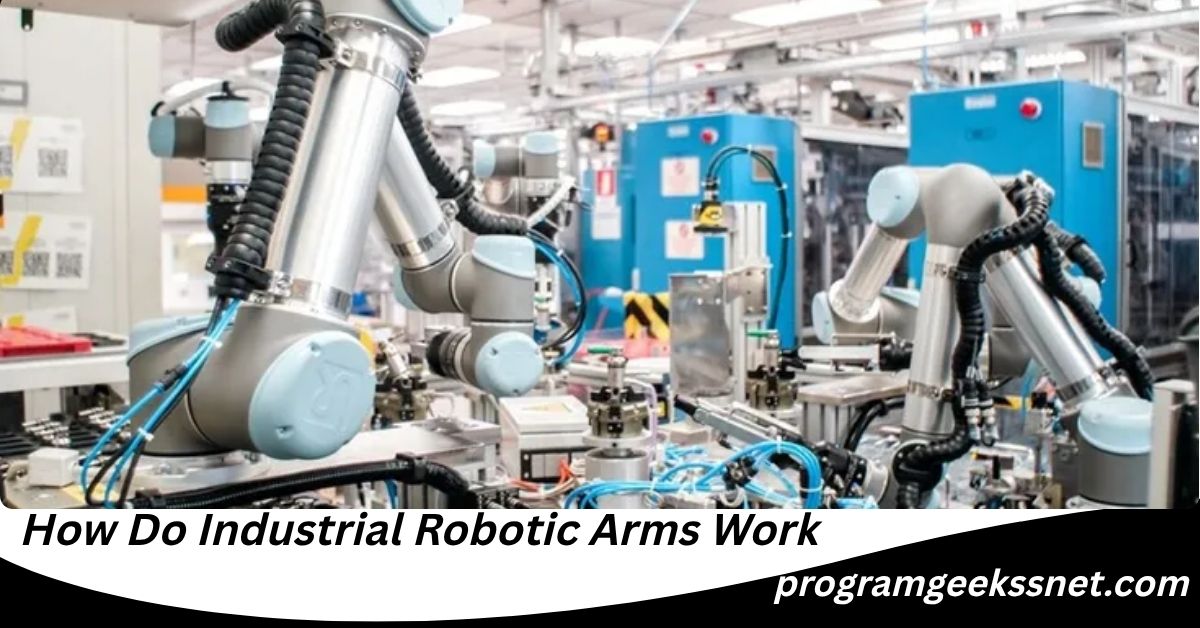
The robotic arm is the visible structure that performs movements.
It consists of multiple segments connected through joints.
The arm allows the robot to reach different positions and angles.
Controller
The controller is the robot’s central computer.
It:
- Processes instructions
- Controls motion
- Receives sensor data
- Coordinates factory operations
Without the controller, the robot cannot function.
End Effector
The end effector is attached to the robot’s arm.
It acts like a human hand.
Examples include:
- Grippers
- Welding torches
- Paint sprayers
- Vacuum tools
- Cutting devices
Different end effectors allow the same robot to perform different tasks.
Drive System
The drive system powers robot movement.
Common drive technologies include:
- Electric motors
- Hydraulic systems
- Pneumatic systems
Most modern factories use electric robots because they are efficient and highly accurate.
Sensors
Sensors provide feedback and environmental awareness.
They help robots:
- Detect objects
- Avoid collisions
- Measure force
- Verify quality
Sensors are becoming increasingly important as factories adopt smarter automation systems.
Software
Software controls robot behavior.
Advanced software can:
- Optimize production
- Analyze data
- Detect defects
- Coordinate multiple robots
Modern software plays a major role in factory automation success.
Types of Industrial Robots Used in Factories
Different robots are designed for different manufacturing tasks.
Articulated Robots
These are the most common industrial robots.
They resemble a human arm with multiple joints.
Applications include:
- Welding
- Painting
- Assembly
- Material handling
Their flexibility makes them ideal for many industries.
SCARA Robots
SCARA stands for Selective Compliance Assembly Robot Arm.
These robots specialize in:
- Fast assembly
- Packaging
- Pick-and-place operations
They are commonly used in electronics manufacturing.
Cartesian Robots
Cartesian robots move along straight X, Y, and Z axes.
They offer:
- High accuracy
- Simple programming
- Reliable operation
Industries often use them for CNC machines and material handling.
Delta Robots
Delta robots are extremely fast.
They are frequently used for:
- Food packaging
- Sorting products
- Pharmaceutical production
Their lightweight design allows rapid movement.
Collaborative Robots
Collaborative robots, often called cobots, work safely alongside human employees.
Also Read: How Much Is the Litter Robot? Complete 2026 Pricing Guide, Costs, Features, and Value Analysis
Features include:
- Built-in safety systems
- Force limitation
- Easy programming
Cobots are becoming increasingly popular in small and medium-sized factories.
How Industrial Robots Communicate in Smart Factories
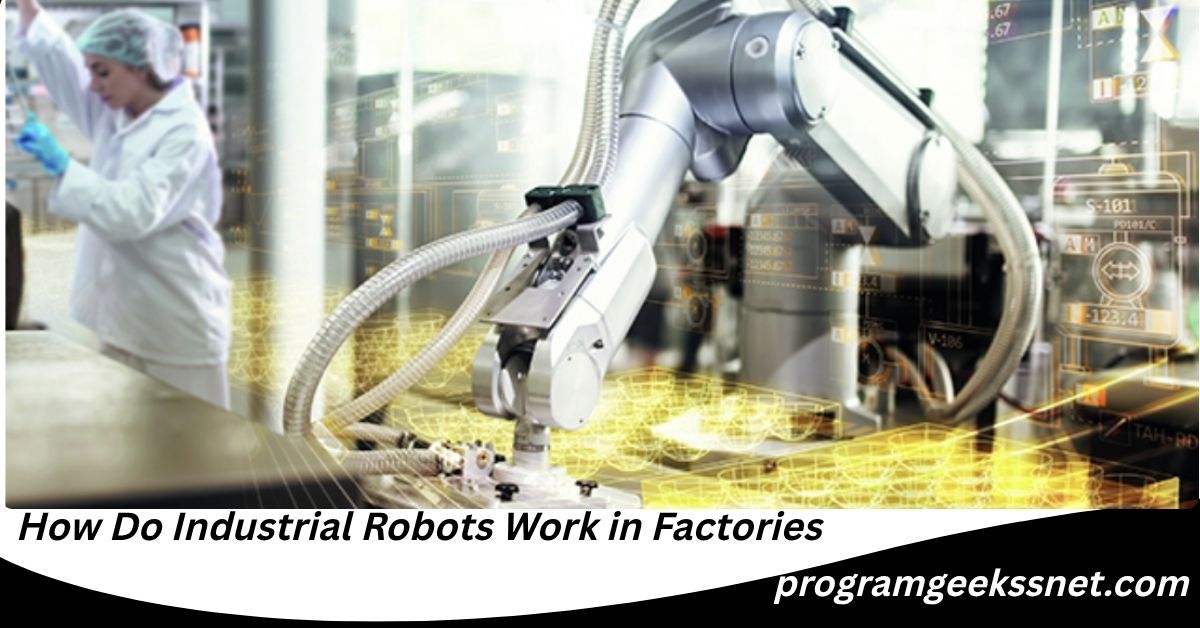
Modern factories are highly connected environments.
Industrial robots communicate with:
- Production machines
- Conveyor systems
- Warehouse systems
- Enterprise software
- Quality control equipment
This communication creates a synchronized manufacturing process.
For example, if a machine finishes producing a component, it can automatically signal a robot to pick up the part and move it to the next station.
This seamless coordination improves efficiency and reduces delays.
How Artificial Intelligence Improves Industrial Robots
Artificial intelligence is changing factory robotics.
Traditional robots followed fixed instructions.
AI-powered robots can:
- Learn from experience
- Recognize patterns
- Improve performance
- Adapt to changes
- Make intelligent decisions
For example, a robot equipped with machine vision can identify product defects and remove faulty items from the production line.
AI also enables predictive maintenance, helping factories reduce costly downtime.
Machine Vision in Industrial Robotics
Machine vision gives robots the ability to see.
A vision system typically includes:
- Cameras
- Lighting systems
- Image processing software
- AI algorithms
The robot captures images and analyzes them instantly.
Machine vision helps robots:
- Locate parts
- Verify dimensions
- Inspect products
- Read barcodes
- Detect defects
Without vision systems, many modern automation applications would be impossible.
How Industrial Robots Handle Materials
Material handling is one of the most common factory applications.
Robots can:
- Lift heavy objects
- Move products
- Load machines
- Unload pallets
- Organize inventory
These tasks reduce physical strain on workers and improve workplace safety.
Robots can operate continuously without fatigue, increasing production capacity.
How Industrial Robots Perform Welding
Welding is a major use of industrial robotics.
Robotic welding systems provide:
- Consistent weld quality
- Faster production
- Improved worker safety
- Reduced material waste
The robot follows programmed welding paths with exceptional accuracy.
This technology is widely used in automotive manufacturing.
How Industrial Robots Perform Assembly
Assembly robots combine parts into finished products.
Tasks may include:
- Installing screws
- Connecting components
- Applying adhesives
- Positioning parts
These robots can perform repetitive tasks thousands of times with minimal variation.
This consistency helps manufacturers maintain high-quality standards.
How Industrial Robots Improve Quality Control
Quality control robots inspect products throughout production.
Using cameras and sensors, they can detect:
- Cracks
- Scratches
- Missing parts
- Measurement errors
- Surface defects
Because robots do not become tired or distracted, inspection accuracy often exceeds manual inspection methods.
Industries That Use Industrial Robots
Many industries rely on robotics.
Automotive Manufacturing
The automotive industry remains one of the largest users of industrial robots.
Robots handle:
- Welding
- Painting
- Assembly
- Inspection
Electronics Manufacturing
Electronics production requires extreme precision.
Robots help assemble:
- Smartphones
- Computers
- Circuit boards
Food and Beverage Processing
Robots package, sort, and handle food products safely.
Pharmaceutical Manufacturing
Robots support:
- Packaging
- Sterile production
- Laboratory automation
Metal Fabrication
Robots perform cutting, welding, and material handling operations.
Consumer Goods Manufacturing
Robots help produce:
- Appliances
- Household products
- Packaging materials
How Do Industrial Robots Work in Factories in Kansas?
When discussing how do industrial robots work in factories in Kansas, the core technology remains the same as factories elsewhere in the United States.
Kansas manufacturers increasingly use robots in industries such as:
- Aerospace manufacturing
- Agricultural equipment production
- Food processing
- Metal fabrication
- Distribution and logistics
Factories in Kansas utilize robotic automation to address labor shortages, improve productivity, and remain competitive in national and global markets.
Many Kansas manufacturers are also adopting collaborative robots because they offer cost-effective automation solutions for small and medium-sized operations.
Benefits of Industrial Robots in Factories
Industrial robots provide numerous advantages.
Higher Productivity
Robots can operate continuously with minimal downtime.
This increases production output significantly.
Improved Quality
Robots perform tasks consistently, reducing variation and defects.
Enhanced Safety
Dangerous jobs can be assigned to robots instead of human workers.
Lower Operating Costs
Although initial investments can be substantial, long-term operating costs are often lower.
Greater Precision
Robots achieve accuracy levels that are difficult for humans to match.
Reduced Waste
Consistent production minimizes material waste.
Better Data Collection
Modern robots generate valuable production data that supports process improvement.
Challenges of Industrial Robotics
Despite their benefits, robots also present challenges.
High Initial Investment
Purchasing and installing robotic systems can require significant capital.
Technical Expertise Requirements
Factories need skilled personnel to program and maintain robots.
Integration Complexity
Connecting robots with existing systems can be challenging.
Cybersecurity Risks
Connected robots must be protected from cyber threats.
Maintenance Needs
Regular maintenance is necessary to ensure reliable operation.
Manufacturers must plan carefully to maximize return on investment.
The Role of Human Workers in Automated Factories
A common misconception is that robots completely replace humans.
In reality, successful factories combine human skills with robotic efficiency.
Humans remain essential for:
- Engineering
- Programming
- Problem-solving
- Innovation
- Maintenance
- Supervision
Robots handle repetitive tasks while people focus on higher-value responsibilities.
This partnership often creates safer and more productive workplaces.
Future Trends in Industrial Robotics
The future of industrial robotics is exciting.
Several trends are shaping the next generation of factory automation.
Artificial Intelligence Expansion
AI will allow robots to become more adaptive and intelligent.
Collaborative Robotics Growth
Cobots will continue expanding across industries.
Digital Twins
Virtual factory simulations will improve planning and optimization.
Advanced Machine Vision
Improved vision systems will enhance robot flexibility.
Predictive Maintenance
AI-driven monitoring will reduce equipment failures.
Autonomous Mobile Robots
Factories will increasingly use mobile robots for transportation tasks.
Cloud Robotics
Cloud-based systems will allow robots to share information and learn more efficiently.
How Small Manufacturers Can Benefit from Robotics
Robotics is no longer limited to large corporations.
Modern solutions have become more affordable.
Small manufacturers can use robots for:
- Packaging
- Machine tending
- Inspection
- Palletizing
- Assembly
Flexible robotic systems allow businesses to automate gradually and achieve measurable productivity gains.
Expert Analysis: Why Industrial Robotics Is Becoming Essential
One important insight often overlooked is that robotics is no longer simply about reducing labor costs.
The real value comes from improving overall operational performance.
Factories today face challenges such as:
- Labor shortages
- Rising quality expectations
- Faster product cycles
- Global competition
Robots help manufacturers respond to these pressures more effectively.
The most successful factories use robotics not as a replacement for people but as a tool that enhances human capabilities.
Companies that strategically combine automation, data analytics, and skilled employees often achieve the strongest long-term results.
This shift represents the true future of manufacturing.
Conclusion
Understanding how do industrial robots work in factories is essential for anyone interested in modern manufacturing. Industrial robots combine advanced hardware, intelligent software, sensors, controllers, and machine vision systems to perform tasks with exceptional speed, precision, and consistency.
From welding and assembly to inspection and material handling, robots have become indispensable tools across countless industries. As artificial intelligence, machine learning, and collaborative robotics continue to advance, factories will become even smarter, more efficient, and more productive.
Whether examining how do industrial robots work in factories article resources online or exploring how do industrial robots work in factories in Kansas manufacturing facilities, one thing is clear: industrial robotics is shaping the future of production and transforming the way goods are made around the world.
Frequently Asked Questions
Can industrial robots work 24 hours a day?
Yes. Industrial robots can operate continuously with scheduled maintenance and proper monitoring. Many factories run robotic systems around the clock to maximize production.
How long does an industrial robot typically last?
Many industrial robots remain operational for 10 to 20 years or more when properly maintained and updated.
Do industrial robots require internet access to function?
No. Most industrial robots can operate without internet connectivity. However, internet connections may be used for monitoring, software updates, and data analysis.
Can industrial robots switch between different products?
Yes. Modern robots can be reprogrammed to handle different products, making them highly flexible for changing production requirements.
Are industrial robots environmentally friendly?
In many cases, yes. Robots can reduce waste, improve energy efficiency, and optimize resource utilization during manufacturing.
What programming languages are used for industrial robots?
Different manufacturers use different programming languages. Common options include proprietary robot languages, Python integrations, C++, and specialized automation software.
Can industrial robots work in extreme temperatures?
Certain industrial robots are designed specifically for extreme heat, cold, or hazardous environments where human workers may face risks.
What is the difference between industrial robots and autonomous mobile robots?
Industrial robots usually remain fixed in one location, while autonomous mobile robots move independently throughout factories and warehouses to transport materials.
Will future factories be completely robotic?
Most experts believe future factories will combine advanced robotics with skilled human workers rather than becoming fully robotic environments.
What skills are needed to work with industrial robots?
Valuable skills include robotics programming, automation engineering, maintenance, data analysis, machine vision, and industrial system integration.
editor's pick
latest video

news via inbox
Nulla turp dis cursus. Integer liberos euismod pretium faucibua